
Shaping the Future of Regional Mobility: Insights from the MOBI-TWIN Cross-Regional Policy Lab
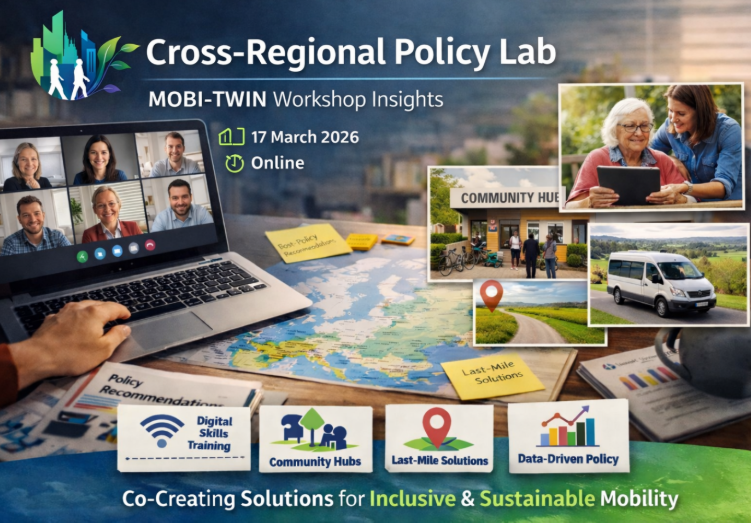
On March 17, 2026, the MOBI-TWIN project successfully conducted an intensive online Cross-Regional Policy Lab. The event served as a collaborative platform for stakeholders from Castilla-La Mancha, Lombardy, Central Macedonia, North & East Finland, and Groningen, aiming to bridge the gap between regional needs and actionable policy strategies for the – digitan and green – Twin Transition .
From Regional Insights to Collective Action
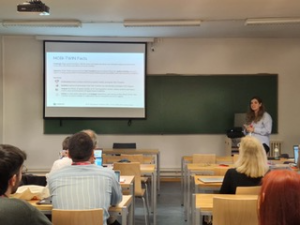
The workshop commenced with a introduction provided by MOBI-TWIN Project Coordinator, Giulia Zendron, who established the framework for the day’s discussions, emphasizing the alignment between regional challenges and EU policy frameworks to ensure scalable impact. Representatives from the European Science Foundation (ESF) then facilitated an opening session where participants shared empirical evidence and outcomes from previous regional policy labs.
Methodological Innovation: Personas and Brainstorming
To ensure a human-centric approach, the Lab utilized a structured brainstorming methodology supported by user personas. Participants collaborated in breakout sessions to identify systemic similarities and regional differences. By analyzing mobility challenges through the lens of specific user profiles — ranging from elderly residents in remote settlements to commuters in digitalized urban hubs — the groups were able to pinpoint critical opportunities for innovation.
The primary challenges identified included:
- Persistent accessibility gaps in sparsely populated areas.
- Infrastructure fragmentation, particularly regarding “last-mile” connectivity.
- The digital divide, which continues to present barriers for vulnerable demographic groups.
Co-Creation and Policy Formulation
Following a democratic selection process where the most impactful ideas were prioritized through voting, the Lab transitioned into a Co-Creation phase. During this session, interdisciplinary teams worked to transform abstract concepts into actionable strategies and formal policy responses.
The deliberations resulted in five strategic pillars for future regional development:
- Digital Inclusion and Skills Development: Implementing tailored training programs to ensure e-services are accessible to all, fostering intergenerational learning and quadruple helix cooperation.
- Community-Centric Service Models: Establishing community hubs and mobile service units to localize essential resources and reduce the necessity for long-distance travel.
- Integrated Mobility Solutions: Developing flexible transport systems, such as on-demand services and unified ticketing, to bridge the “last-mile” gap.
- Evidence-Based Policymaking: Utilizing regional data and participatory consultations to ensure policies reflect the nuanced needs of the citizenry.
- Strategic Governance and Partnerships: Enhancing multi-level coordination and public-private collaboration to scale successful mobility interventions across European regions.
Conclusion and Next Steps
The core message of the MOBI-TWIN Policy Lab is clear: a successful Twin Transition in mobility must be both inclusive and place-based. By prioritizing the needs of the most mobility-constrained users, regional authorities can develop more resilient and equitable transport systems for the entire community.
The outcomes of this workshop will serve as a foundation for the next stages of the MOBI-TWIN project, guiding the implementation of pilot actions and strategic recommendations.